
The Invisible Conductor: Managing Chaos with the F5 BIG-LTM-i5600
You know that specific kind of silence that happens in a server room right before a catastrophic failure? It is usually followed by a frantic dashboard turning red and a flood of tickets. For network architects and system administrators, the F5
BIG-LTM-i5600 is not just a piece of hardware; it is the insurance policy against that silence. This device is the quintessential "traffic cop" for the modern data center. Its job is to sit in the critical path between your users and your applications, making split-second decisions on where to send data. It ensures that a user in London isn't waiting on a server in New York if a local instance is available, and it handles the heavy cryptographic lifting of SSL encryption so your actual application servers can focus on serving content rather than doing math.
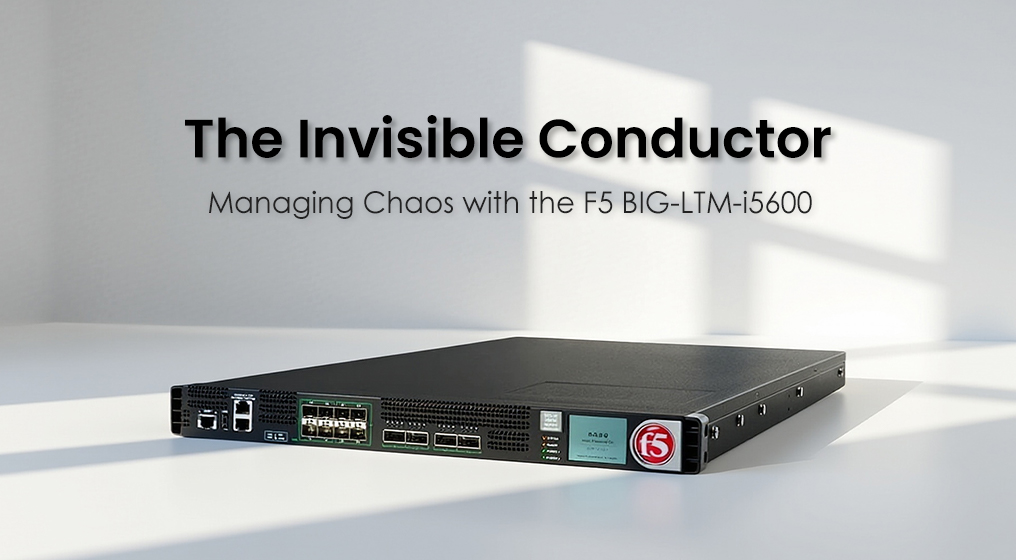
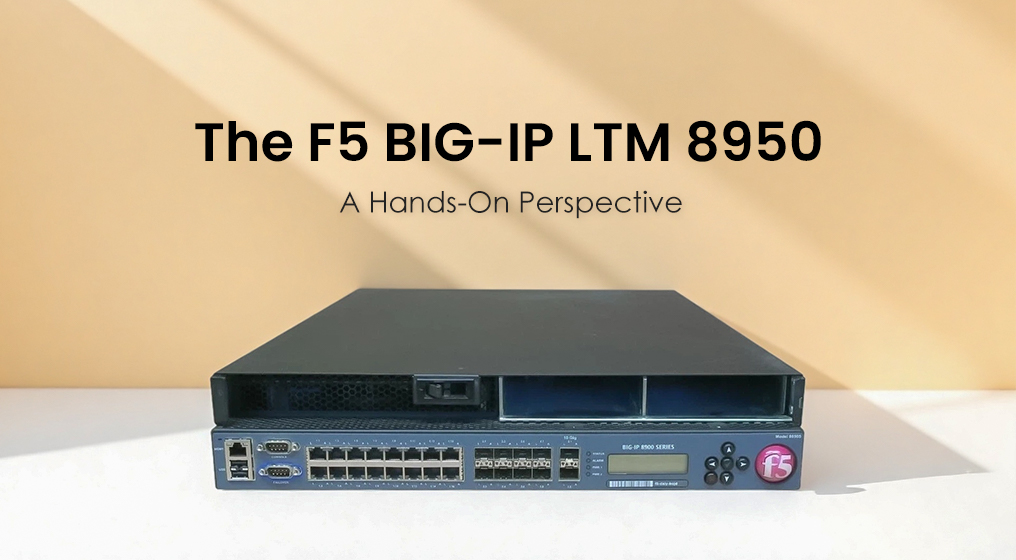
From a user experience perspective, interacting with the i5600 is an exercise in granular control. When you first rack it, the physical presence is reassuringly industrial. It is a dense 1U chassis, weighing in at roughly 26 pounds (11.8 kg), which gives it a solid, "tank-like" feel typical of enterprise-grade gear. It slides into a standard rack with a depth of roughly 22.5 inches. The front panel is utilitarian, dominated by status LEDs that blink in a rhythm that eventually becomes comforting to a seasoned admin. But the real experience happens in the software interface. Navigating the Traffic Management Operating System (TMOS) can be daunting for a rookie—it is deep, complex, and powerful—but for a pro, it offers a level of visibility into Layer 7 traffic that is unparalleled. You can see exactly
what is inside the packets, not just where they are going.

The performance metrics of the i5600 are where it truly justifies its existence in a high-traffic environment. This is not a toy; it is a beast designed for throughput. It is powered by a robust 4-core Intel Xeon processor (featuring 8 hyper-threaded logical cores) and comes equipped with 48 GB of DDR4 memory. This hardware foundation allows it to handle a massive 60 Gbps of throughput at Layer 4. If you are running heavy application logic at Layer 7, it still pushes an impressive 35 Gbps. For the security-conscious, the hardware offload capabilities are a game changer, handling up to 20,000 SSL transactions per second (TPS) with 2K RSA keys. This means your web servers don't choke when a secure connection is initiated.
| Core Specification |
Detail |
| Processor |
4-Core Intel Xeon (8 logical cores) |
| Memory |
48 GB DDR4 |
| Storage |
480 GB Enterprise SSD |
| Throughput (L4/L7) |
60 Gbps / 35 Gbps |
| SSL TPS (RSA 2K) |
20,000 TPS |
| Network Ports |
8 x 10Gb SFP+, 4 x 40Gb QSFP+ |
| L7 Request Rate |
1.1 Million requests/sec |
| Concurrent Connections |
40 Million (L4) |
| Power Supply |
650W Platinum AC |
When looking at the connectivity, the i5600 is built for the future of fiber. It comes standard with eight 10Gb SFP+ ports and four 40Gb QSFP+ ports. This flexibility allows it to integrate seamlessly into ecosystems that are transitioning from 10G to 40G backbones. The "User Experience" here extends to the physical cabling—having QSFP+ ports means you can use breakout cables to feed four 10G connections from a single 40G port, offering incredible density for server farm connections.
In terms of value and ecosystem, the i5600 occupies a "sweet spot" in the market. It is significantly more powerful than the entry-level 2000 or 4000 series, yet it avoids the massive price tag and power consumption of the 10000 series chassis. For a mid-to-large enterprise, the cost-performance ratio is excellent because it consolidates functions. It replaces the need for separate load balancers, SSL accelerators, and some DDoS mitigation hardware. The ecosystem integration is mature; it plays nicely with VMware, OpenStack, and major cloud providers, allowing for hybrid deployments where the physical i5600 manages traffic alongside virtual instances.
However, no device is without its trade-offs. The primary advantage is its sheer capability and the stability of the TMOS software, which is the industry standard for a reason. The "Full Proxy" architecture allows for deep inspection and manipulation of traffic that cheaper "pass-through" load balancers simply cannot do. On the flip side, the complexity is a double-edged sword. It requires skilled administrators; you cannot just plug it in and hope for the best. Furthermore, while the 480GB SSD is fast, it is relatively small if you plan on doing extensive logging locally. Additionally, as a high-performance appliance, it generates a fair amount of heat (roughly 905 BTU/hr), so your cooling infrastructure needs to be up to par.
Ultimately, the F5
BIG-LTM-i5600 is about control. In a world where application downtime costs thousands of dollars per minute, this device provides the stability, speed, and security necessary to keep the digital lights on. It is a sophisticated tool for a sophisticated job, bridging the gap between raw network speed and intelligent application delivery.