
Intellectual Property
Hot selling product recommendations
View More




















The A9K-1X100GE-TR: Powering Modern Network Infrastructures
When it comes to keeping digital ecosystems running smoothly, the A9K-1X100GE-TR Line Card stands out as a critical component for high-demand networking environments. This isn't just another piece of hardware—it's the engine that transforms robust infrastructure into responsive, adaptable networks capable of handling today's relentless data flows. What makes it indispensable isn't any single revolutionary feature, but how it brings together performance, reliability, and advanced capabilities in a way that just works, day in and day out.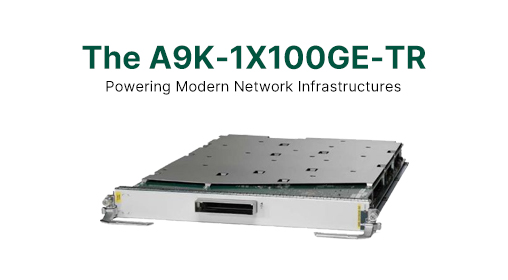
Think of the A9K-1X100GE-TR as a high-performance engine for Cisco's ASR 9000 series routers. It's what allows these systems to handle the enormous data throughput required by service providers and large enterprises for traffic routing in high-performance edge and core networks. The single-port 100 Gigabit Ethernet configuration ensures superior data handling for modern networking demands, acting as a vital component for directing data traffic efficiently. Its design allows it to seamlessly integrate with existing Cisco ASR 9000 Series chassis, meaning no hardware upgrade to the chassis or cooling system is typically required, which simplifies network evolution. This line card can simultaneously support both Layer 2 and Layer 3 services and features, which provides operators with significant flexibility. This capability allows for the qualification and stocking of a single line card type that can be deployed in various applications, thereby helping to reduce capital and operating expenditures.
Under the hood, the A9K-1X100GE-TR packs substantial resources engineered for heavy lifting. The numbers tell a clear story of its capacity.
|
Parameter |
Specification |
|---|---|
|
Interface Type |
QSFP28 |
|
Port Configuration |
Single-port 100 Gigabit Ethernet |
|
Key Functionality |
High-speed traffic routing for edge and core networks |
|
Advanced Features |
Equipped with advanced Quality of Service (QoS) features |
|
Design Focus |
Scalable design for future bandwidth needs, low latency performance, energy efficiency |
This level of performance means the card can manage intense data traffic while supporting advanced features. The scalable design provides the necessary headroom for network growth, ensuring that performance remains consistent even as demands increase. The inclusion of robust QoS support also highlights its role in efficient traffic management without creating bottlenecks.
Visually, the unit presents a professional, purpose-driven aesthetic typical of high-grade network equipment. It adopts a modular line card design that seamlessly integrates into compatible Cisco ASR 9000 series chassis slots. The build quality suggests durability, with components firmly seated and connectors designed for repeated engagement. While specifics about front-panel indicators are nuanced, the overall impression is of a component where reliability takes precedence over flashy design—a sensible approach for hardware destined for controlled environment installations.
Where this line card truly shines is in its functional versatility. It's built to do more than just move data quickly. The support for advanced traffic management and QoS simplifies network operations and paves the way for more efficient traffic engineering. Its ability to handle both Layer 2 and Layer 3 services adds a layer of future-proofing. The design, which focuses on delivering top-tier performance with optimized power consumption, provides tangible operational benefits, such as simplified capacity planning and more adaptable network architectures. These aren't just theoretical advantages—they translate into real-world operational benefits for managing complex network traffic.
From an operational standpoint, those who deploy the A9K-1X100GE-TR appreciate its contribution to network stability. The high-speed connectivity and reduced occurrence of processing delays mean more predictable network performance. For teams managing extensive infrastructure, the robust build quality and reliability translate into less worry about hardware failures. The advanced feature set also provides valuable tools for optimizing traffic flow, giving administrators more control and flexibility in how they manage their environments. The energy-efficient design is an often-overlooked benefit that contributes to lower operational costs over time, which is a significant factor in large-scale deployments.
Evaluating its value proposition reveals an interesting picture. While the initial investment places it in the premium category, the total cost of ownership benefits from several factors. The high reliability and durability help minimize unexpected downtime and hardware replacement expenses. The power efficiency contributes to lower operational costs. Perhaps most importantly, the substantial capacity and support for modern technologies mean that networks can adapt and grow without requiring premature hardware refreshes. This combination of performance, features, and longevity makes it a strategically sound choice for organizations whose operations depend critically on network availability and performance.
Like any sophisticated component, the A9K-1X100GE-TR presents a balanced set of characteristics. Its higher initial cost and technical complexity mean it's best suited for environments that genuinely require its capabilities, with implementation and management typically requiring specialized knowledge. The substantial throughput and advanced features come with corresponding power and cooling considerations that must be factored into deployment planning. For the right organization—one that needs reliable high-performance networking—the strengths significantly outweigh the considerations, providing a solid foundation for critical network services.
There's a certain elegance in how the A9K-1X100GE-TR embodies the principle of doing one thing exceptionally well. It doesn't seek attention with flashy features but earns respect through consistent, reliable performance under pressure. In the intricate dance of data packets that constitutes modern networking, this line card serves as a steady, capable partner—one that network architects can depend on to keep information flowing smoothly, securely, and efficiently. It represents not just a technical solution, but a commitment to operational excellence in an increasingly connected world.