
Intellectual Property
Hot selling product recommendations
View More




















Power over Ethernet: The Deciding Factor Between Cisco's C9200-48P-E and C9200-48T-E
Choosing between the Cisco Catalyst C9200-48P-E and the C9200-48T-E ultimately boils down to a single, crucial question: does your network need to power devices over the Ethernet cable itself? This isn't just a minor feature check; it's a fundamental decision that impacts everything from your initial setup to long-term flexibility and cost. One switch is a versatile power plant, the other is a streamlined data highway. Picking the wrong one can lead to a messy web of power adapters or a significant investment in unused capability.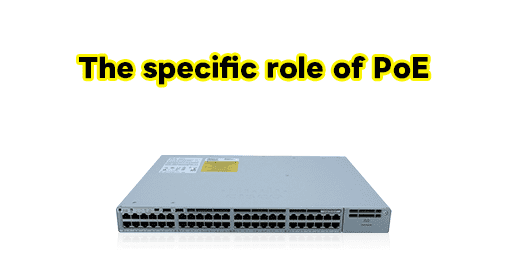
Let's get straight to the heart of the matter with a side-by-side look at their core specs.
|
Feature |
Cisco Catalyst C9200-48P-E |
Cisco Catalyst C9200-48T-E |
|---|---|---|
|
Core Differentiator |
Data Switching + PoE+ Power Sourcing |
Data Switching Only |
|
Port Configuration |
48 x Gigabit Ethernet RJ45 Ports |
48 x Gigabit Ethernet RJ45 Ports |
|
PoE Support |
Yes, PoE+ (IEEE 802.3at)
|
No
|
|
Typical Power Supply |
High-wattage (e.g., 600W/1000W+) for PoE budget
|
Standard (e.g., 125W) for switch operation only
|
|
Key Application |
Connecting and powering devices like IP phones, wireless APs, and cameras
|
Connecting data-only devices like computers, printers, and servers
|
|
Backplane Bandwidth |
176 Gbps
|
176 Gbps
|
|
Packet Forwarding Rate |
361.9 Mpps
|
361.9 Mpps
|
|
Primary Advantage |
Simplifies deployment and reduces cabling for powered devices |
Lower initial cost and power consumption for data-only needs |
Understanding the Magic and Muscle of PoE
Power over Ethernet (PoE) is a brilliant piece of technology that allows a single network cable to carry both data and electrical power. Think of it as delivering electricity through the information superhighway. This works through a system where the switch acts as the Power Sourcing Equipment (PSE), and devices like phones or cameras are the Powered Devices (PD). The switch intelligently detects a compatible PD and negotiates how much power to send, up to 25.5 watts with the PoE+ standard supported by the C9200-48P-E. The real-world benefit is profound: you can mount a wireless access point on a high ceiling or a security camera on the outside wall of a building with just one cable running to it, eliminating the need for an electrician to install a power outlet nearby. This centralizes power management and makes backup power for all connected devices as simple as plugging the switch into a UPS.
Lived Experience: Deployment and Day-to-Day Management
The experience of using these two switches diverges sharply from the moment you unbox them. The C9200-48P-E is the go-to for dynamic office spaces, classrooms, or modern buildings filled with connected gadgets. Deploying a new IP phone? Just run a network cable, and the phone gets both its data connection and power. Setting up a new Wi-Fi hotspot? Plug in the access point, and you're done. The simplicity is transformative, drastically cutting down installation time and cost. However, this convenience comes with a physical footprint—it requires a more robust power supply and generates more heat, which needs to be considered for cooling and rack power capacity.
In contrast, the C9200-48T-E is the specialist for data-centric environments. If your switch is primarily connecting desktop computers in a lab, servers in a data rack, or printers in an office that already have convenient power outlets, this model is the leaner, more efficient choice. Setup is straightforward: connect your devices, configure your networks, and forget it. It's quieter, consumes less energy, and has a smaller operational footprint because it doesn't have the additional complexity of power delivery electronics. It does one job, and it does it exceptionally well without any fuss.
Weighing Value and Long-Term Costs
When discussing value, it's not just about the sticker price. The C9200-48T-E almost always has a lower initial purchase price, making it the clear winner for budgets focused purely on data connectivity. You're not paying for power circuitry you won't use.
The value proposition of the C9200-48P-E, however, is measured differently. Its higher cost is an investment in operational efficiency and future-proofing. The savings come from reduced installation costs—you avoid paying for additional electrical work and outlets for every single device. The flexibility it offers is a huge part of its value; if you decide to reconfigure an office space or add a new type of powered device a year from now, the capability is already built-in. You're investing in a network that can adapt and grow with your needs without requiring a hardware swap.
The Bottom Line: Making Your Choice
Your decision should be guided by a clear assessment of your current and foreseeable needs.
Choose the Cisco Catalyst C9200-48P-E if your network landscape includes, or will soon include, devices that draw power from the Ethernet cable. This is the definitive choice for powering a suite of IP phones, wireless access points, and surveillance cameras. It's the engine for a modern, connected workspace where simplicity and flexibility are paramount.
Opt for the Cisco Catalyst C9200-48T-E when your network's role is exclusively to move data. It's the perfect, cost-effective solution for connecting computers to servers, in data centers, or in any scenario where all your end-devices have easy access to their own power sources. It delivers robust, reliable Layer 2 switching performance without any unnecessary features or associated costs.
There's no universal "better" switch, only the one that is perfectly suited to the devices it needs to support. Carefully mapping your connected devices against their power requirements will lead you to the right choice for a cleaner, more efficient, and more manageable network.