
Intellectual Property
Hot selling product recommendations
View More




















Choosing the right license for your Cisco Catalyst switch—essentially deciding between the -E (Essentials) and -A (Advantage) tiers—is a common puzzle. It's not just about cost; it's about matching the license's capabilities to your network's present and future needs. Let's break down what these licenses mean, using the specific examples of the Cisco Catalyst 9300-48T-A and C9300-48T-E switches.
Think of Cisco's licensing structure as having two core components: a perpetual Network Stack license (which is baked into the hardware you buy, either as Network Essentialsor Network Advantage), and a mandatory term-based Software Subscription (like Cisco DNA Essentialsor Advantage) that you subscribe to for 3, 5, or 7 years.
-E is for Essentials: The Network Essentials license is your foundation. It provides robust Layer 2 switching and basic Layer 3 features, primarily static routing and RIP. It's perfect for an access layer switch where the primary job is to connect end-users and devices reliably, without the need for complex routing protocols.
-A is for Advantage: The Network Advantage license includes everything in Essentials and unlocks the full potential of the switch. It adds advanced routing protocols (like OSPF, EIGRP, and BGP), sophisticated security features (such as TrustSec), and comprehensive automation capabilities. This tier is necessary for aggregation or core roles, and for leveraging technologies like Cisco Software-Defined Access (SD-Access).
Let's get specific. The hardware for a C9300-48T-Eand a C9300-48T-Ais identical: both are 48-port gigabit Ethernet switches. The critical difference lies in the software features unlocked by their licenses. From a performance perspective, their hardware capabilities—like switching capacity and packet forwarding rate—are the same. The difference is in the intelligencethe software can leverage.The core functional differences are significant. The C9300-48T-E (-ELicense) is a workhorse for the network edge. It excels at connecting users but is limited to basic IP routing. The C9300-48T-A (-ALicense), in contrast, is a full-featured network citizen. It supports complex dynamic routing, advanced analytics, and the policy-based automation that modern network designs like SD-Access depend on.
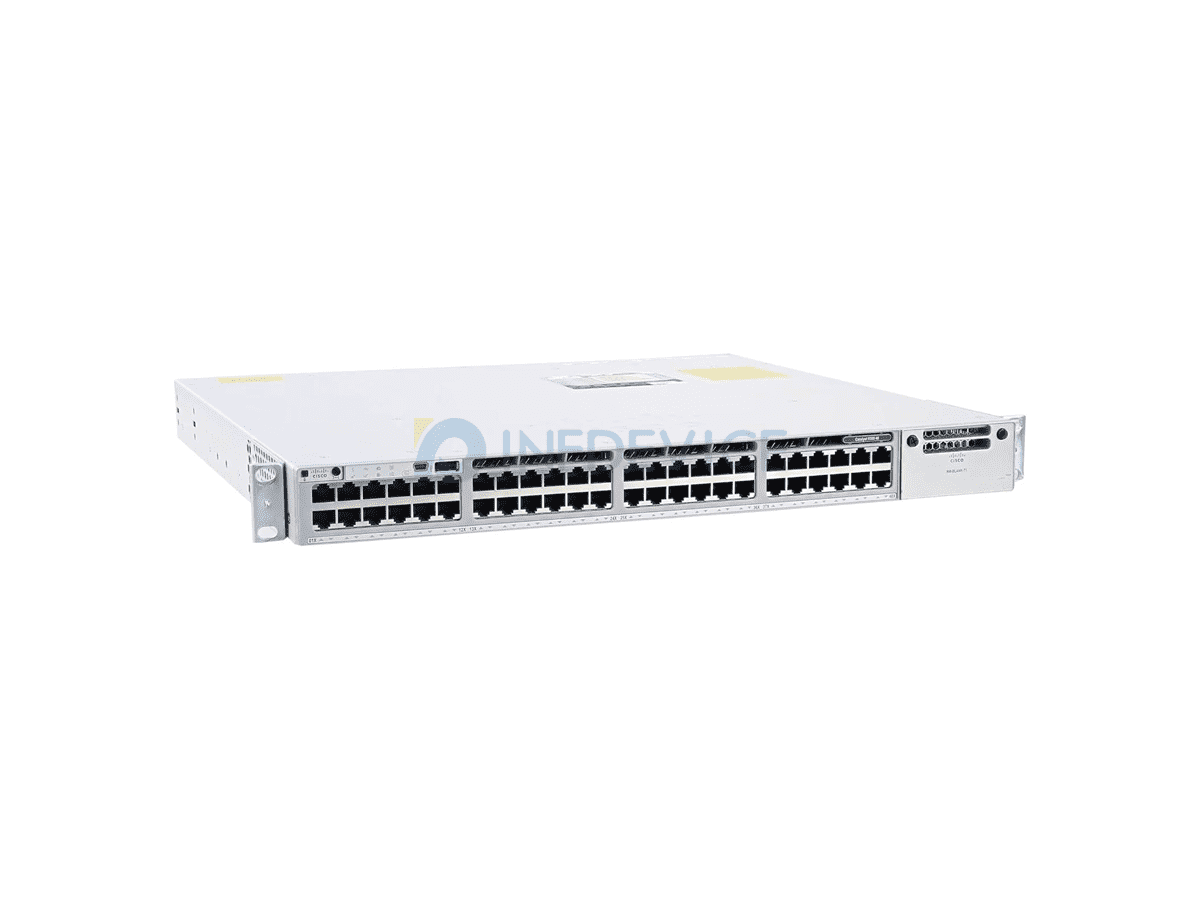
Your daily experience managing the network will vary greatly between the two.With the -E model, you're working mostly through the command-line interface (CLI) or a built-in web interface. It gets the job done for straightforward configurations. The -A model unlocks management through Cisco Catalyst Center (formerly DNA Center), which provides a single pane of glass for automating, managing, and assuring your entire network. For a large deployment, the time saved and errors avoided through automation can be substantial.When it comes to value, the -E license has a lower upfront cost and is the clear winner for budgets focused strictly on access layer connectivity. The -A license is an investment in flexibility, scalability, and future-proofing. If there's any chance you'll need advanced routing, network segmentation, or centralized automation within the next few years, the -A license is more cost-effective in the long run than a complex upgrade later.
Here’s a quick summary to guide your decision:
|
Feature |
C9300-48T-E (Essentials) |
C9300-48T-A (Advantage) |
|---|---|---|
|
Best For |
Access layer, basic routing needs, cost-conscious projects |
Core/aggregation layers, advanced routing (OSPF, EIGRP, BGP), SD-Access, automation |
|
Key Strengths |
Solid foundational features, lower initial cost
|
Maximum feature set, future-proof, enables centralized management and automation
|
|
Considerations |
Lacks advanced routing and SD-Access capabilities |
Higher initial investment |
Choose the -E license if: Your switch will act purely as an access layer device, you only need basic static routing, and your primary goal is to provide reliable connectivity at the lowest possible cost.
Choose the -A license if: The switch will participate in dynamic routing, you plan to implement a software-defined network like SD-Access, or you simply want to keep your options open for future network expansion and advanced services.
Ultimately, the "right" choice hinges on the role the switch will play in your network architecture. By understanding the capabilities each license unlocks, you can make a confident decision that aligns with both your technical requirements and your budget.