
Intellectual Property
Hot selling product recommendations
View More




















Cisco's A9K Line Card Face-Off: 2T20GE-B vs. 4X100GE-TR
Picking the right line card for your Cisco ASR 9000 router is a bit like choosing the engine for a truck. You wouldn't put a massive, high-revving diesel engine in a delivery van that does city stop-starts, right? The A9K-2T20GE-B and the A9K-4X100GE-TR are two very different "engines," each built for a specific kind of job on the network highway. Let's get into what really sets them apart, beyond just the spec sheet.
First things first, the core difference boils down to port density versus port speed. Think of the A9K-2T20GE-B as your workhorse for connectivity. It's packing twenty 1 Gigabit Ethernet ports and two 10 Gigabit Ethernet ports. This card is all about linking to a ton of different devices or networks, perfect for aggregating traffic from many slower-speed links. On the other side of the ring, the A9K-4X100GE-TR is the purebred speedster. With its four 100 Gigabit Ethernet ports, it's designed for one thing: moving enormous amounts of data as fast as possible on a few critical highways. It's the difference between a multi-lane city intersection and a high-speed freeway.
Here’s a quick look at their core parameters to keep things clear:
|
Core Parameter |
A9K-2T20GE-B |
A9K-4X100GE-TR |
|---|---|---|
|
Port Density |
20 x 1GE ports + 2 x 10GE ports |
4 x 100GE ports |
|
Primary Use Case |
High-density, lower-speed aggregation |
Ultra-high-speed core transport |
|
Typical Deployment |
Network edge, customer aggregation |
Data center interconnect, core network |
|
Throughput Focus |
Flexibility and quantity of connections |
Raw data transfer speed |
When you look at performance, it's not just about the numbers. The 2T20GE-B gives you a lot of flexibility. You can connect a large number of customers, cell towers, or branch offices without breaking a sweat. It's about managing scale. The 4X100GE-TR is the opposite. Its performance is measured in how efficiently it can shovel massive data flows—think video streams or data backups between cloud data centers—with minimal delay. One handles breadth, the other handles depth.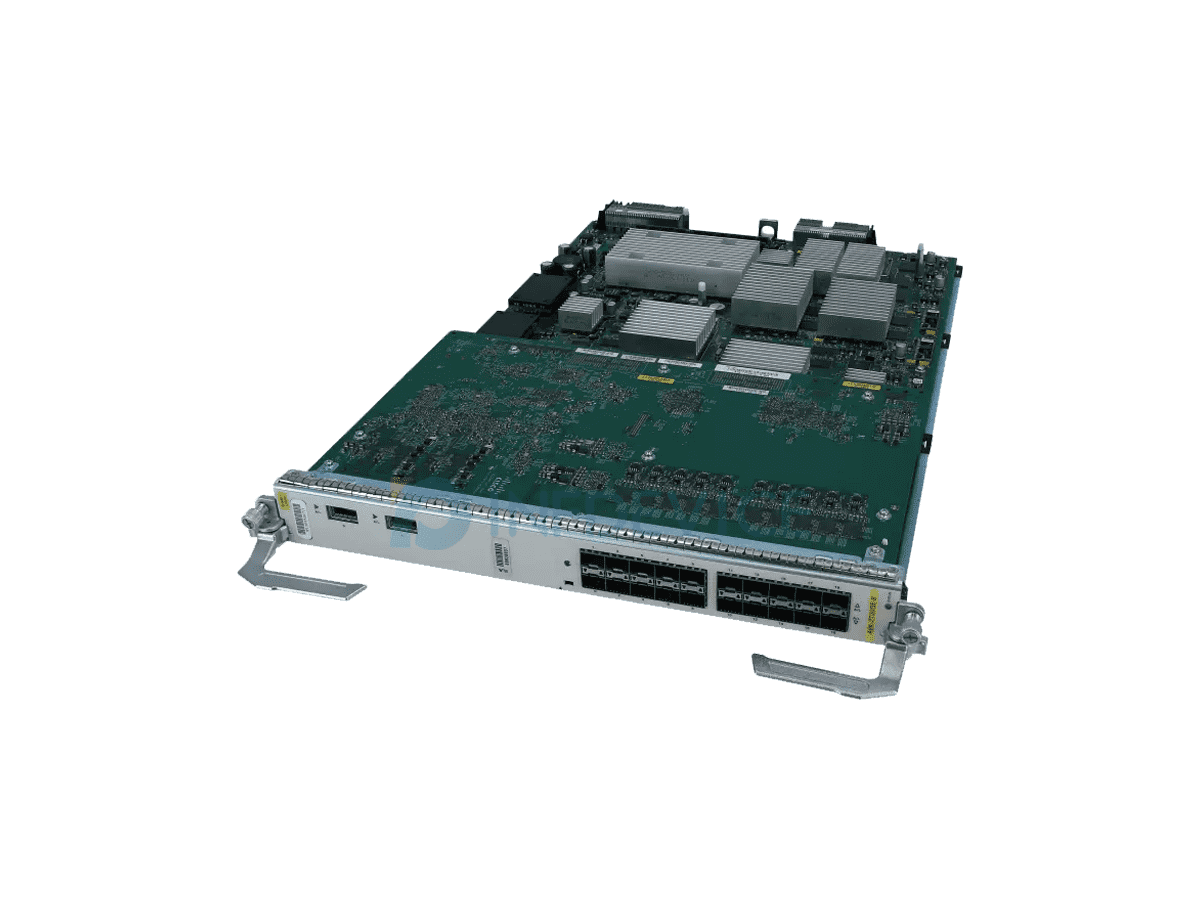
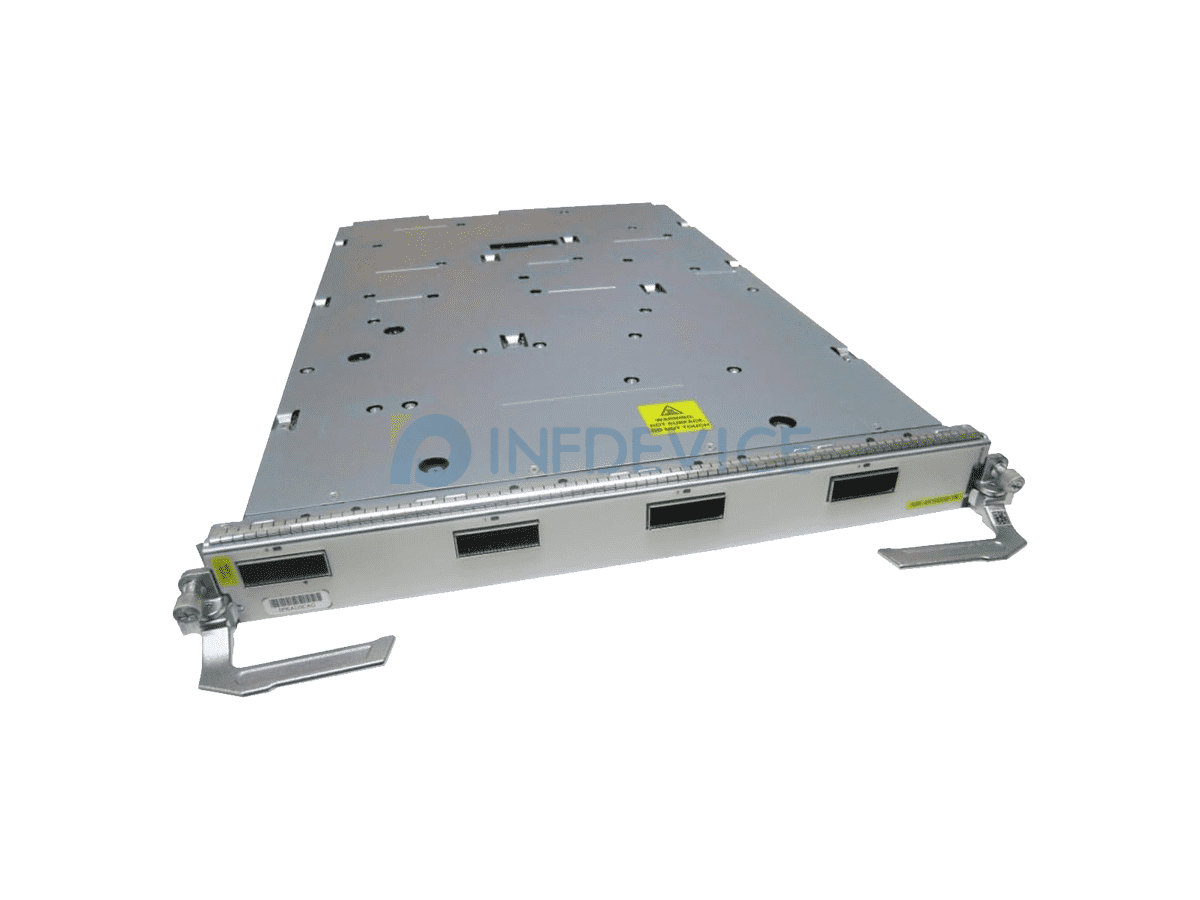
A9K-2T20GE-B A9K-4X100GE-TR
As for looks, well, they're both line cards that slide into the same ASR 9K chassis, so they share the same core Cisco aesthetic. But the tell-tale sign is the faceplate. The 2T20GE-B will have a much denser array of smaller ports (those SFP/SFP+ sockets), while the 4X100GE-TR's faceplate is dominated by four large, unmistakable QSFP28 cages for the 100G optics. The physical appearance screams their purpose: one is crowded and detailed, the other is minimalist and powerful.
Functionality is where their personalities really shine. The 2T20GE-B is often the go-to for feature-rich edges. We're talking about applying detailed quality of service (QoS) policies, sophisticated security filters, and deep packet inspection across a multitude of connections. It's built for complexity. The 4X100GE-TR, in contrast, is typically optimized for raw forwarding power. Its job is to get packets from A to B with blistering speed and reliability, often with simpler, broader policies. It's a specialist in throughput.
For the network engineer, the user experience differs. Configuring the 2T20GE-B can feel more granular, like meticulously tuning a complex instrument. You're dealing with many interfaces, each potentially with its own settings. Managing the 4X100GE-TR is more about ensuring the super-highway is clear and running at peak efficiency; there are fewer interfaces, but the stakes for each are much higher.
Now, about value. The 2T20GE-B likely offers a better cost-per-portfor Gigabit and 10-Gigabit connectivity. If that's what your network is built on, it's a very efficient way to scale. The 4X100GE-TR's value is in its cost-efficiency at 100G speeds. If you need that kind of firepower, it's a more compact and powerful solution than trying to bundle multiple lower-speed links.
Stability is key for both, but the challenges differ. The 2T20GE-B needs to be rock-solid while handling a complex mix of traffic patterns and policies on many interfaces. The 4X100GE-TR must prove its mettle under the immense, constant pressure of high-speed data flow, where any hiccup can cause significant data loss.
So, which one's for you?
The A9K-2T20GE-B is your best bet if... your world is about connecting lots of things at standard speeds. Its biggest strength is its versatility and port density for 1G/10G networks. The potential downside is that it's not built for the 100G-and-beyond world.
The A9K-4X100GE-TR is the clear choice if... you're building the core backbone or linking data centers. Its strength is its focused, high-throughput design for the most demanding traffic. The trade-off is lower port count and less flexibility for granular edge services.
In the end, it comes down to your network's geography. Are you building a sprawling city of connections or a few bullet trains? Your answer points directly to the right card.