
Intellectual Property
Hot selling product recommendations
View More




















Picking the right wireless access point for your business network can feel like a tough choice. You're often weighing the latest technology against proven reliability. Let's break down two solid options from Cisco: the newer Catalyst C9115AXI-H and the established Aironet AIR-AP2802I-H-K9. This isn't about finding a "winner," but about which one is the right fit for your specific needs.
Here’s a quick look at how they stack up on paper.
|
Feature |
Cisco Catalyst C9115AXI-H |
Cisco Aironet AIR-AP2802I-H-K9 |
|---|---|---|
|
Wi-Fi Generation |
Wi-Fi 6 (802.11ax) |
Wi-Fi 5 (802.11ac Wave 2) |
|
Max Theoretical Speed |
Higher potential speeds with Wi-Fi 6 efficiencies |
Up to 1.7 Gbps
|
|
Key Technology |
OFDMA, MU-MIMO, BSS Coloring |
MU-MIMO
|
|
Target Environment |
High-density, modern offices, IoT deployments |
Dense environments, offices, industrial sites
|
|
Design & Mounting |
Low-profile, ceiling/wall mount |
Low-profile, ceiling/wall mount |
|
Durability |
Standard enterprise-grade |
Industrial-grade (IP67 rating, wider operating temperature)
|
|
Management |
Cisco Catalyst Center (DNA Center) |
Cisco Wireless LAN Controller (WLC), Cisco DNA Center
|
|
Approx. Price |
Around ¥6,000
|
Around ¥3,800 - ¥4,500
|
The most significant difference lies in their core Wi-Fi generation. The C9115AXI-H comes with the advantages of Wi-Fi 6 (802.11ax). Its standout feature is OFDMA (Orthogonal Frequency Division Multiple Access). Think of it like a delivery truck that can drop off packages to multiple houses in a single trip, instead of making separate trips for each. This makes it incredibly efficient in handling many devices simultaneously—perfect for today's crowded offices full of phones, laptops, and IoT sensors.The AIR-AP2802I-H-K9, on the other hand, is a robust Wi-Fi 5 (802.11ac Wave 2) performer. It supports MU-MIMO, which is great for serving multiple users at once, and it has a proven track record of reliability. However, it lacks the advanced scheduling efficiency of Wi-Fi 6's OFDMA. In very high-density scenarios, the C9115AXI-H is simply better equipped to manage congestion and deliver a consistent experience to every user.
Honestly, from a distance, they look quite similar. Both are designed with a low-profile, sleek form factor meant to be mounted discreetly on ceilings or walls. The physical installation experience will be comparable for a network technician.Where they really differ is in ruggedness. The AIR-AP2802I-H-K9 is the clear winner here, built to be industrial-strength. It boasts an IP67 rating, meaning it's completely dust-tight and can withstand immersion in water. It can also operate in a much wider temperature range (-40°C to +65°C), making it ideal for harsh environments like factories, warehouses, or outdoor installations. The C9115AXI-H is built for standard office conditions.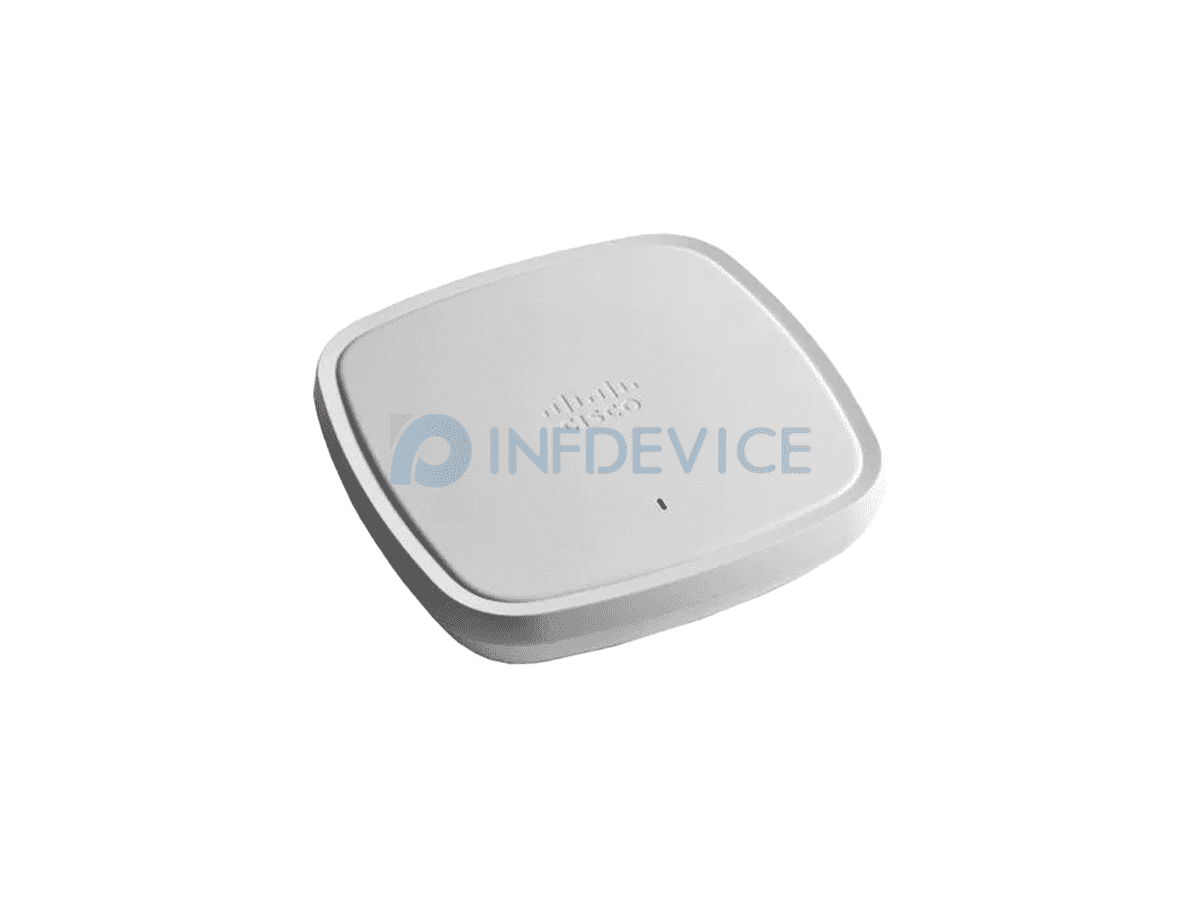
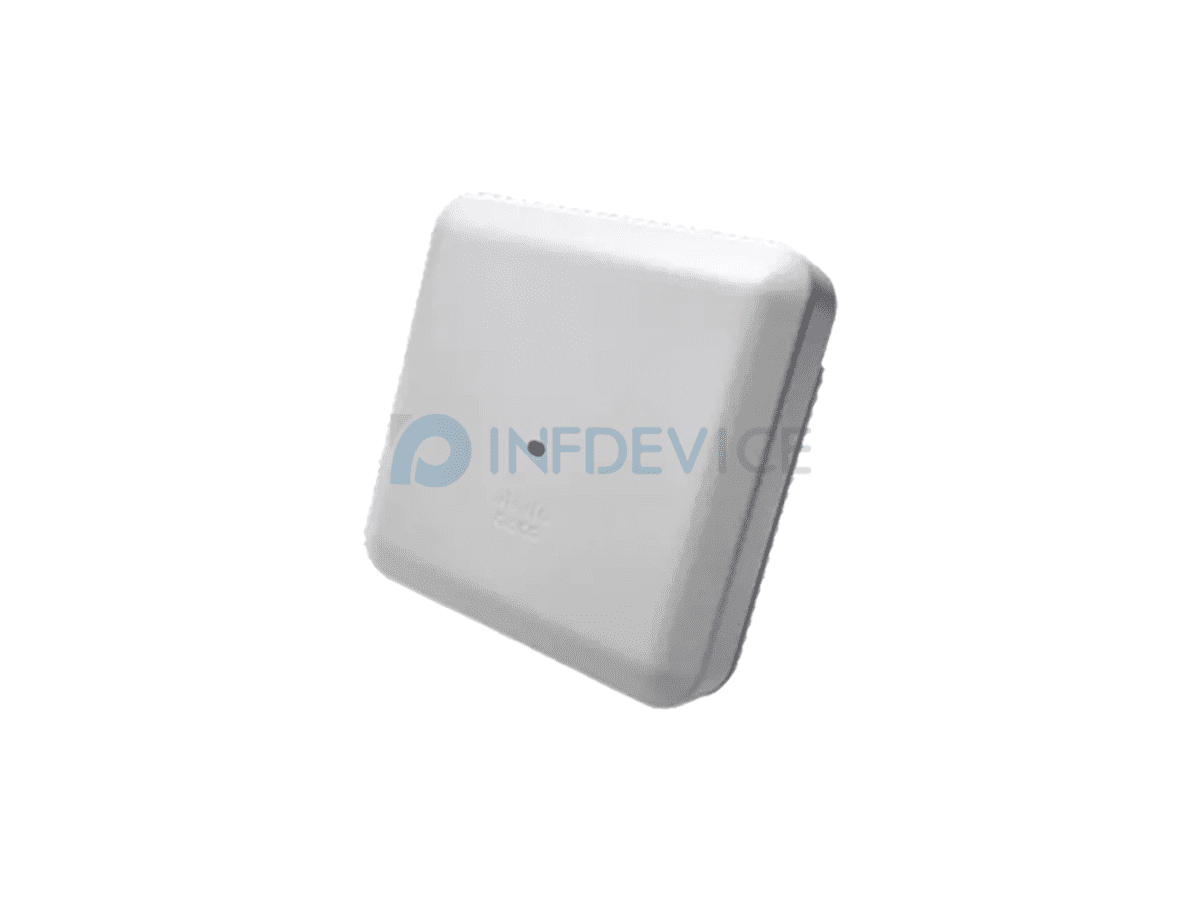
C9115AXI-H AIR-AP2802I-H-K9
For the end-user, the experience on the C9115AXI-H should be more robust and consistent, especially in crowded areas. Video calls are less likely to stutter, and file transfers feel quicker because Wi-Fi 6 is designed to reduce latency for everyone connected. It's built for the modern, device-heavy workstyle.The 2802 provides a very solid and reliable connection. Users will be happy with it, provided the network isn't pushed beyond its capacity. Its built-in Bluetooth and Zigbee support also make it a strong choice for IoT deployments right out of the box.From a management perspective, the 2802 is a classic controller-based AP, comfortable with a Cisco Wireless LAN Controller (WLC). The C9115AXI-H, while compatible, is designed to thrive in a more modern framework like Cisco Catalyst Center (DNA Center), which offers deeper automation and analytics.
This is the classic "future-proof vs. proven value" debate.
The Aironet 2802 offers a lower upfront cost. It's a fantastic value if your primary needs are solid, reliable Wi-Fi 5 performance and you need a rugged AP or are already invested in a Cisco WLC environment.
The Catalyst C9115AXI-H is an investment in the long-term. You're paying for Wi-Fi 6 efficiencies, better performance in high-density scenarios, and a platform that will support new applications for years to come. The higher initial cost can be justified by delayed future upgrades and improved productivity.
Cisco Catalyst C9115AXI-H (Wi-Fi 6)
Pros: Superior performance in high-density areas, future-proof technology (OFDMA, Wi-Fi 6), better battery life for client devices, designed for modern management platforms.
Cons: Higher initial cost, potential overkill for simpler, smaller environments, not built for harsh conditions.
Aironet AIR-AP2802I-H-K9 (Wi-Fi 5 Wave 2)
Pros: Excellent and proven reliability, industrial-grade durability (IP67, wide temperature range), great value for money, strong IoT readiness.
Cons: Lacks the advanced efficiency of Wi-Fi 6, may struggle more as the number of devices per user continues to grow.
It really comes down to your situation.
Choose the Cisco Catalyst C9115AXI-H if you're building a new network, upgrading for the long haul, have a very dense user environment (like a large open-plan office), or are deploying latency-sensitive applications. It's the clear choice for future-proofing.
Choose the Aironet AIR-AP2802I-H-K9 if you need a reliable AP for a challenging environment (factory, warehouse, outdoors), are on a tighter budget, your current user demands are being met by Wi-Fi 5, or you have a strong IoT focus. It remains a highly competent and rugged workhorse.
Hope this detailed, side-by-side look helps you see the clear differences and make the right choice for your wireless needs